

Program notes for March 2026 concert
Jump to notes by clicking on title:
José Maurício Nunes Garcia: Laudate Pueri Dominum, CPM 79 • Laudate Dominum Omnes Gentes, CPM 78 •
Wolfgang Amadeus Mozart: Requiem Mass in D Minor, KV 626
Notes by Margarita Restrepo, PhD
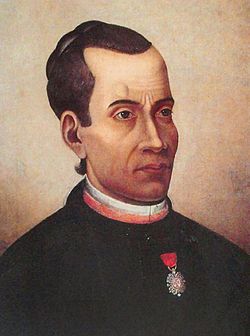 José Maurício Nunes Garcia:
Laudate Pueri Dominum, CPM 79
Laudate Pueri Dominum (Psalm 113/112) and Laudate Dominum Omnes Gentes (Psalm 117/116) are both expressions of praise and are two of the five psalms used in the Catholic tradition on Sundays or feast day Vespers (evening prayer). Like many composers before him, Nunes considered them a pair. He composed them in 1821, both use musical ideas borrowed from Joseph Haydn’s oratorio The Creation (1798), are structured into three sections and scored for the same musical forces: mixed chorus (SATB), 2 clarinets, 2 horns, timpani, and strings, giving an important role to the orchestra, as it opens and closes the pieces, as well as plays numerous interludes. It is interesting that both manuscript scores have the annotation Para as Encomendaçoens dos Innocentes falecidos, meaning the Feast of the Holy Innocents, celebrated on December 28 and commemorating the young children in Bethlehem slain by King Herod the Great. Since that feast typically features psalms focusing on themes of liberation, divine protection, and the salvation of the innocent, the annotation suggests that in Brazil these psalms, joyful calls to universal praise for God's enduring love and truth, were used instead.
Like other colonial composers in Spanish and Portuguese America, Nunes replicates European trends, particularly the Viennese style represented by the music of Wolfgang Mozart and Joseph Haydn. Although both had passed away, Mozart in 1791 and Haydn in 1809, their work formed a lasting, influential foundation that still resonated in colonial Rio de Janeiro, the seat of the Portuguese Empire since 1808. Nunes set all nine verses of Laudate Pueri Dominum. The opening, verses 1 to 4, praises the Lord above all nations and above the heavens. To emphasize the celebratory mood of praise, Nunes has the entire choir singing in a homorhythm and syllabic setting. A fortissimo in verse 3 emphasizes how the Lord’s name is praised from “the rising of the sun” and a darker chord in pianissimo shows the praise extends until “the sun goes down.” To bring the first section to a close, Nunes repeats verse 4, “the Lord is high above all nations, and his glory above the heavens” several times, with the word “excelsus” (above) stated eight times. The second section features the soloist singing verses 5 and 6, asking “who is like unto the Lord our God?” The key is now B-flat major and the tempo is slower, but the most noticeable contrast, however, is the melodic style of the soloist. It is dramatic and virtuosic with frequent leaps and decorations. The last section is a reprise of the first, E-flat major and a faster tempo return, but setting verses 7 to 9, stating that although God is exalted above the heavens, He protects the poor, the needy, and the barren, raising them up to places of honor and dignity. The piece closes with the doxology. Nunes remains consistent with the homorhythmic style he used earlier, as well as his insistence on melodies based in repeated notes, but uses shorter rhythmic values to bring the piece to a joyful ending, emphasized by the emphatic chords of the orchestra.
José Maurício Nunes Garcia:
Laudate Dominum Omnes Gentes, CPM 78
The shortest psalm in the Book of Psalms, Laudate Dominum Omnes Gentes is a call to praise, urging all nations and peoples to worship God. Mirroring Laudate Pueri Dominum, Nunes also structures this psalm into three sections. After an orchestral opening, the chorus praises the Lord in joyful melodies in homorhythm. Unlike the previous psalm, he makes more use of dissonance to increase tension in verse 2 for the words “enduring forever.” In the middle section, now in F major and in slower tempo, the soloist sings the beginning of the doxology. Again, this is a more decorated and virtuosic part. C major and the faster tempo returns for the closing section that sounds like a return of the first, but the dissonant section is now highlighting the many repetitions of the word “Amen.” Nunes, once more, utilizes the orchestra to provide a bright and sonorous ending to the piece.
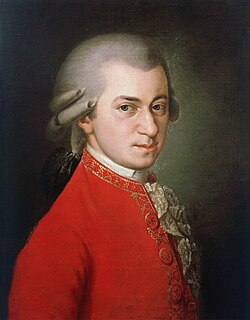 Wolfgang Amadeus Mozart:
Requiem Mass in D Minor, KV 626
As a freelance musician in Vienna, Mozart made a substantial income from commissions by patrons. In mid-July 1791, he received a commission for a requiem Mass, a service for the dead. The request was presented anonymously by a messenger of Count Franz von Walsegg, an amateur musician who was in the habit of commissioning works and then passing them off as his own in private performances at his palace. Von Walsegg was planning to play the requiem in February of 1792 to commemorate the first anniversary of the death of his 20-year-old wife. Although Mozart accepted half of the fee, he did not begin working on it until after returning from Prague in September 1791, where he was conducting his opera La clemenza di Tito (KV 621). At his death on 15 December the same year, the Requiem was left unfinished.
Faced with substantial debt, as Mozart was a big spender who lived above his means, his wife Constanze sought to have the work completed so that she could collect the final payment. She initially asked Joseph Eybler, a prominent composer in Vienna, to finish it, but he felt unable to match Mozart's genius and returned the score to her. Next, she turned to Franz Xaver Süßmayr, a student of Mozart, who completed the work, allowing her to deliver the piece and receive payment. Because of the haste in finalizing the piece, it is not known how much of the final work was written by Mozart versus Süßmayr, giving rise to a debate that has not been entirely resolved. In subsequent years, a number of alternative completions have been developed by composers and musicologists; one of the latest is the version we are singing this afternoon by English conductor Howard Arman, who wrote a new orchestration in 2020 considered more in keeping with Mozart’s compositional style. Notwithstanding the controversy, Mozart’s Requiem remains one of the most significant and revered choral masterpieces in Western classical music.
Mozart follows the traditional structure of requiem Masses consisting of seven movements. Some are part of the daily Mass – Kyrie, Sanctus and Agnus Dei, while others, with texts of mourning and remembrance, are only used in this Mass – Introit, Sequence, Offertory and Communion. The Introit sets the stage for the piece. It opens with a somber instrumental introduction using imitation among the instruments and featuring a basset horn, a member of the clarinet family to create a dark and haunting sound, omitting higher-pitched flutes and oboes. The trombones announce the entrance of the basses singing “Grant them eternal rest” in a mournful melody followed by the other voices in imitation. Mozart uses homorhythm to emphasize “perpetual light shine upon them,” but the “hymn and vow that shall be paid to the Lord in Jerusalem,” is sung by the soprano soloist. The choir returns for the plea “Oh Lord, hear my prayer,” alternating in counterpoint followed by insistent homorhythm for “perpetual light,” transitioning to the Kyrie without a pause.
The Kyrie movement introduces one of the striking features of the requiem: ending major sections with a “double fugue,” in which subjects and countersubjects are repeated throughout the movements by each voice to create a layered expression of the theme. The movement is not textually robust (Kyrie Eleison, Christe Eleison/God have mercy, Christ have mercy) and is sometimes placed at the end of the Introit without separation in the score. In this new edition from Arman, it is considered its own movement. This double fugue is arguably a callback to more polyphonic baroque styles, which some scholars have argued is a result of Mozart’s increased study of J.S. Bach and G.F. Handel in the 1780s. Both the subject and countersubject outline the tonic triad as well as incorporating the diminished vii chord, a type of melodic structure frequently employed by both Bach and Handel. There is also evidence that Mozart spent extensive time researching in the music library of Baron Gottfried van Swieten, a massive collection of Bach and Handel scores, and in turn began incorporating polyphonic structures into his late work. The Kyrie is a masterful example of this development.
The Dies Irae is based on a medieval multi-stanzaic poem that describes the Last Judgment. Mozart sets the text in six sections in one of the most dramatic movements in choral literature. Contrasting with the slow and solemn Introit, the opening section of this movement, which sets the first two stanzas of the poem, erupts without introduction in an explosive and loud Allegro. It feels urgent, relentless, with brass and timpani creating an ominous effect. The choir’s intense melody in homorhythm screams “day of wrath, dreadful day.” Tuba Mirum, stanzas 3 to 7, is a terrifying call to judgment. The dramatic opening trombone solo represents the final trumpet call that echoes across all graves, calling souls to the Last Judgment. Mozart sets this section into a dialogue between the soloists, exploring the judgment of “the lives of all the dead.” Rex Tremendae, stanza 8, is powerful and dramatic. Reiterations of “Majestic King” are sung by the choir in dotted homorhythm, commonly used to represent royalty and nobility, interspersed with imitation and end with intense repetitions of “save me.” In Recordare, stanzas 9 to 15, the soloists sing intertwining melodies asking “dear Jesus” for mercy, providing a calm, contemplative respite contrasting with the dramatic sections surrounding it. Confutatis is characterized by a striking difference between the emphatic male chorus expressing fear of the “fires of misery” and the quiet, ethereal melodies sung by the female voices asking to be among “the chosen.” The Lacrimosa, the emotional heart of the work, brings the movement to an end with sweeping, sorrowful melodies representing weeping for “that day that wakes the dead” and pleading to Jesus for “Your light and rest.” Although Süßmayr had ended the movement with a two-chord “Amen” cadence, a sketch for an "Amen" fugue was found in the 1960s among Mozart’s papers, suggesting that he intended a more elaborate fugal ending. Arman, like other musicologists in the past, included it in his edition as it provides a stronger ending to the weighty movement.
The Offertory is divided into two contrasting sections. In Domine Jesu Christe, forceful melodies ask for liberation from the “pains of hell, the bottomless pit” and the “lion’s mouth,” while the gentle Hostias offers “sacrifices and prayers” for the deceased. The most striking sections, however, are the two energetic and intricate fugues showing Mozart’s mastery of counterpoint. The first one pleading “not be swallowed into the darkness of hell” and the second to be brought “into holy light” and “to pass from death to life” as was promised to Abraham. According to a letter written by Süßmayr in 1800, the Sanctus and Agnus Dei were composed by him. Following Mozart’s fondness for contrast and drama, Süßmayr opens the Sanctus with the choir singing solemn reiterations of “Holy,” followed by a fugue for “Hosanna in the highest.” The Benedictus, the second section of the Sanctus, brings a lyrical respite with the soloists in dialogue singing “Blessed is he who comes in the name of the Lord.” Süßmayr ends the movement with a reprise of the “Hosanna” fugue sung by the choir, providing structural unity. In the brief Agnus Dei, the chorus once more pleads for mercy and eternal rest using homorhythmic melodies that add urgency and poignancy to the movement over the strings’ chromatic writing. The Communion uses material from the Introit and Kyrie, creating a cyclical structure that brings the work to a unified close. The text, “May light eternal shine upon them,” shifts the tone from the fear of judgment to themes of mercy, peace, and eternal rest.